

Tesla and SpaceX: What the Flying Roadster Really Demonstrates
A technology demonstration and a planned halo product can serve several goals. This case examines what Tesla has shown, what it proposes to sell, and what remai...
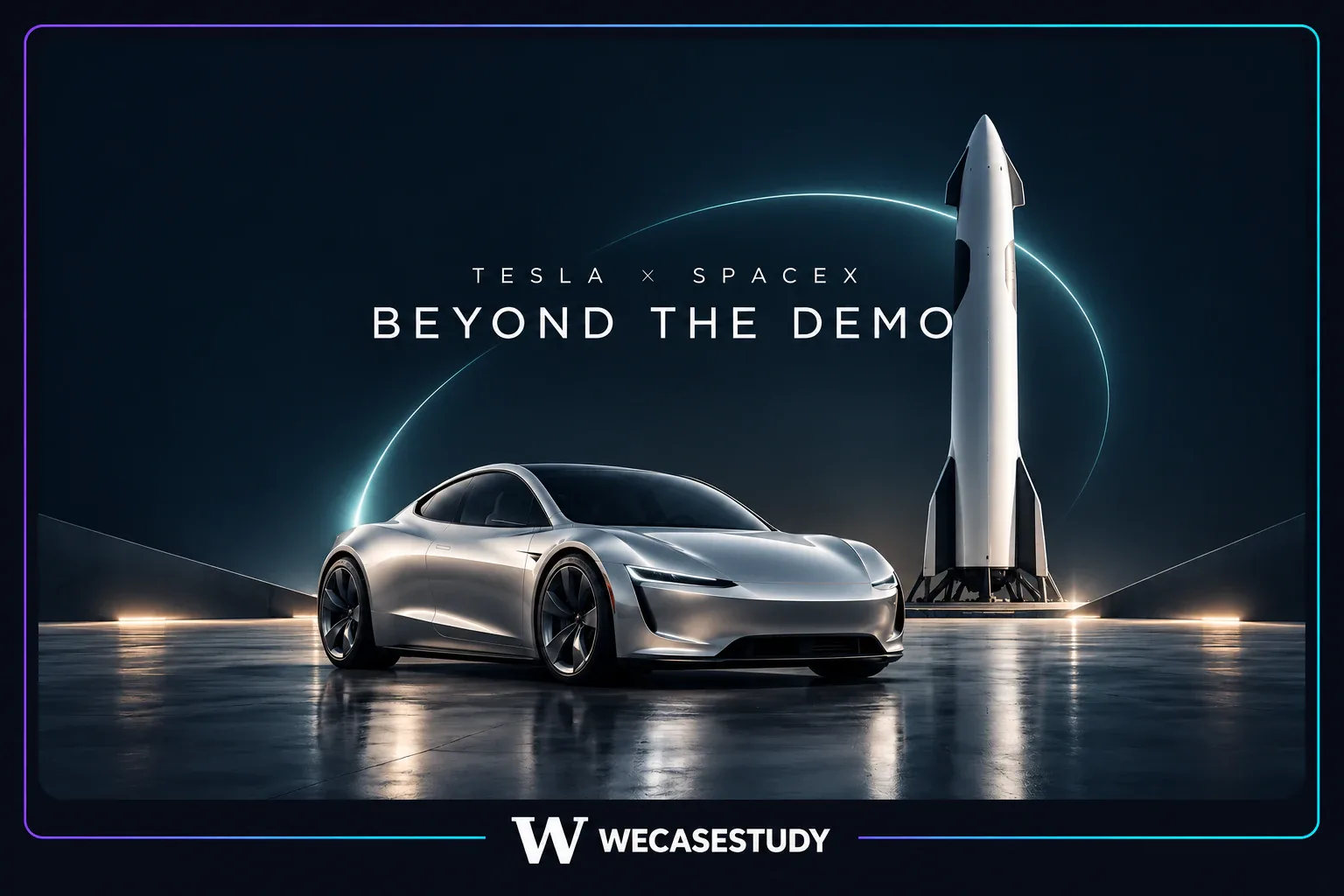
A technology demonstration and a planned halo product can serve several goals. This case examines what Tesla has shown, what it proposes to sell, and what remains unproven.
A flying sports car can demonstrate engineering, build a brand and preview a future customer product. Those purposes can coexist, but they require different measures of success.
Tesla’s 15 October Roadster demonstration at SpaceX’s McGregor facility combined suction-assisted surface grip with thruster-assisted aerial manoeuvres. Reuters reported a 2028 production target and reservation deposits of $50,000 for Performance and $250,000 for Thrust, with Rocket offered by invitation. Those deposits are not final vehicle prices.
This establishes planned commercial intent, alongside the demonstrated capabilities. It does not establish that vehicle sales are the programme’s primary purpose. The Associated Press also reports reservations, while noting there is no guaranteed delivery timeline.
For founders, managers and investors, the useful question is therefore: what can a frontier demonstration achieve before, alongside or independently of customer deliveries?
This is a case about a demonstrated prototype and a planned halo product—a vehicle intended to showcase a brand’s capabilities. It is not a completed commercial success story. Research, brand distinction and sales are plausible sources of value; the public evidence does not establish their relative priority or financial contribution.
What readers can take from this case:
Set the purpose before choosing the score: a research demonstrator, brand showcase and customer product need different tests.
Separate technology borrowed for a project from improvements the project creates for others.
Evaluate the whole operating cycle, including preparation, replenishment and maintenance.
Give ambitious experiments a budget, a decision date and a clear rule for what happens next.
The connection is deeper than a shared founder
Cooperation between Tesla and SpaceX predates this reveal. Tesla’s 2020 proxy statement disclosed agreements to build a custom tool for SpaceX during scheduled facility downtime and temporarily assign approximately 20 employees to support technical matters.
Those disclosures establish a practical precedent for sharing expertise and manufacturing resources. They do not establish which people or tools contributed to this Roadster.
The distinction matters. A shared founder can make introductions easier and give an unusual project executive support. Useful collaboration still happens through specifications, contracts, testing, manufacturing and people who understand both applications.
Nor does the car simply reproduce a rocket landing system. SpaceX’s Falcon documentation distinguishes nitrogen-gas attitude control from its liquid-propellant Merlin engines. The relevant connection is expertise in managing forces, pressure systems and vehicle orientation. A car also introduces its own packaging, road vibration, maintenance and bystander constraints.
For Tesla, the business opportunity lies in adapting knowledge across those boundaries. Aerospace credentials alone cannot establish automotive usefulness.
What problem could justify this much complexity?
A performance EV can have more motor power than its tyres can use. At a slow corner, extra power is of limited help if the contact patches already struggle to transmit braking, cornering or acceleration forces.
Fan-generated downforce can increase the load pressing the tyres against a surface, including at low speeds. Directional thrusters can apply force directly to the vehicle. They address different constraints: suction needs a suitable nearby surface, while reaction thrust consumes a finite supply of pressurised gas.
For a future customer version, the commercial question is whether the improvement survives the added weight, energy use, servicing and operating restrictions. As a demonstration, it can instead test integration and show what is technically possible under specified conditions.
If Tesla proceeds with customer deliveries, two potential user groups make that question concrete:
Potential buyer | Useful outcome | Decisive purchase evidence |
|---|---|---|
Specialist track operator or performance enthusiast | More usable performance through slow corners and braking zones | Repeated session results, reliability and total cost per operating hour |
Professional demonstration or stunt operator | A controlled manoeuvre that creates a valuable production or audience experience | Repeatability, safe operating procedures, insurance availability and turnaround cost |
These are hypotheses about demand, not evidence of orders. Nevertheless, they are more testable than a broad claim that the Roadster will transform everyday transport.
A small market can support a valuable product. It must contain customers willing to pay for the complete ownership experience, including the inconvenient parts.
The overlooked distinction: importing technology versus creating it
The most useful question in this case is what the Roadster contributes after receiving technology from elsewhere.
Installing an existing aerospace component in a car demonstrates adaptation. If the project then makes that component smaller, cheaper, more durable or easier to maintain—and another product adopts the improvement—it has created an additional benefit.
Those are separate events. Calling both “technology spillover” can make the project sound more productive than the evidence supports.
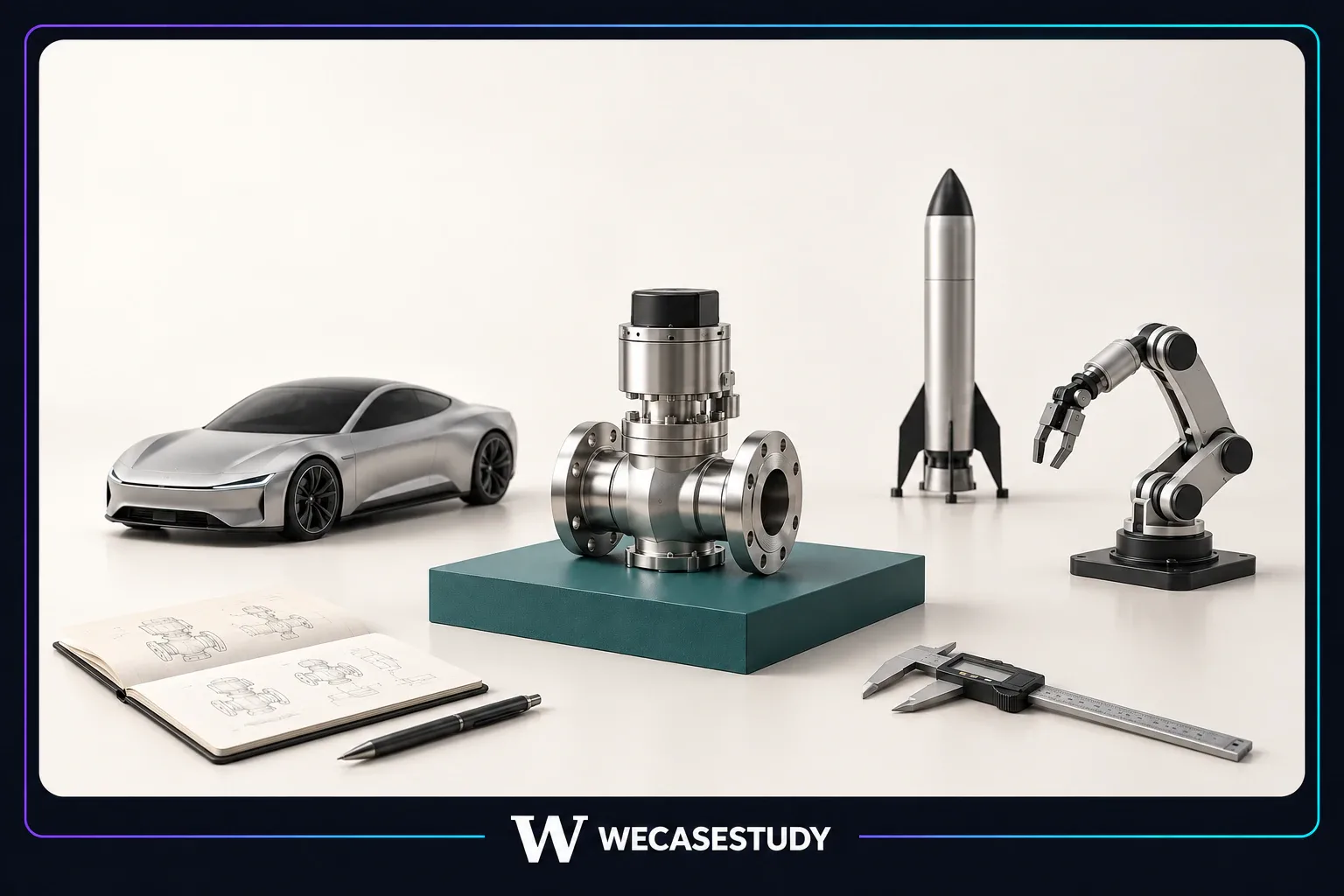
Consider a hypothetical valve developed during Roadster testing. Its next use might require lower noise, longer service life or different environmental protection. Until another engineering team validates it against those requirements, its reuse value remains uncertain.
The strongest evidence would identify the receiving product, the adopted change and the benefit measured against the previous design. A patent or an impressive prototype cannot supply that whole chain.
This is where the Roadster could become strategically significant: an expensive test environment might expose problems that ordinary development programmes would never encounter. Whether solving them benefits anything else remains an open question.
How to assess value without assuming sales are the main goal
Product economics, if deliveries proceed. The car could generate a positive contribution from a specialist customer base. That requires pricing that covers manufacturing and support, alongside enough demand to justify development and tooling. Exclusivity can support pricing; it does not eliminate warranty obligations.
Reusable engineering. Components, manufacturing methods, test procedures or control software could reduce the cost or development time of later products. Credit should follow documented adoption. A list of imaginable applications is not a financial return.
Brand and recruitment. A difficult physical demonstration can make a company interesting to customers and engineers. Its value should appear in outcomes such as incremental customer demand, stronger hiring or improved retention. Views alone cannot show those effects, and the same sale should not be counted twice as both product and brand value.
Against all three sits opportunity cost: what else could the same money, engineering time and leadership attention have achieved?
A programme can legitimately prioritise research or brand distinction over vehicle profit. Its assessment should match the objective: a well-run experiment could succeed without becoming a retail product. Conversely, a promise of future customer deliveries needs its own accountability. Neither standard should quietly substitute for the other.
A mundane reliability improvement might benefit many more customers. An ambitious experiment might unlock knowledge that routine work would never produce. Management has to compare the best plausible alternatives, including uncertainty, rather than judge the project only against doing nothing.
Public sources reviewed for this case do not establish a complete Roadster development budget or a verified return on that investment. Any confident profitability verdict would run ahead of the evidence.
Who pays—and who owns the useful result?
The companies’ relationship adds an important governance question.
Tesla’s 2026 Form 10-K/A describes commercial, licensing and support agreements with SpaceX, alongside an audit-committee process for related-person transactions. This documents an existing framework for cooperation; it does not provide the Roadster’s complete project economics.
For any comparable collaboration, decision-makers should establish who funds the work, owns improvements, receives licensing rights and carries support obligations. They should also examine whether each participating business receives reasonable value for its contribution.
Shared leadership can accelerate decisions. It cannot answer those allocation questions by itself. Even a technically successful project can distribute its costs and benefits unevenly.
Clear agreements help engineers move faster because they reduce uncertainty about what can be shared and commercialised. Governance therefore belongs inside the innovation process.
The competitor that makes the case more interesting
McMurtry offers a useful comparison. Its Applied Technology business markets fan-downforce, battery and electric-powertrain expertise for bespoke applications outside its own car programme.
That is evidence of an offered business model, not proof of profitable licensing contracts. It nevertheless illustrates another route to value: sell specialist capabilities to customers who will never buy the original vehicle.
For Tesla, a future component or engineering application could matter independently of Roadster sales. The relevant milestone would be an actual internal adoption or paying external customer.
For smaller businesses, the implication is practical. Access to another industry’s expertise can come through suppliers, research partnerships and licensing. A founder does not need to control both companies to attempt a useful technology transfer.
What each stakeholder is right to ask
The fairest assessment changes with whose resources, expectations or safety are involved.
Perspective | Strongest case for the project | Question it still has to answer |
|---|---|---|
Customer | Access to a distinctive performance experience | Can I use, maintain and insure it where I intend to operate? |
Engineer or employee | Difficult work that develops valuable skills | Are targets, resources and validation standards realistic? |
Shareholder | Product returns and capabilities with future uses | What is the bounded cost, and what better work might be displaced? |
Supplier or partner | A demanding application that improves expertise | Who owns improvements and pays for redesigns or failures? |
Regulator, insurer or nearby resident | Potentially useful experimentation | What are the demonstrated risks, noise impacts and operating safeguards? |
Competitor | A new technical benchmark to learn from | Which benefits remain compelling after complexity and cost are included? |
Environmental assessment also needs a defined boundary: energy use, materials, servicing and actual usage. An electric drivetrain alone cannot establish the net environmental value of this particular application.
These perspectives do not produce a single automatic verdict. Together, they define the evidence a durable business needs.
A practical method readers can use
The Roadster provides a useful prompt for any team considering an ambitious experiment. Before funding the next stage, complete this decision worksheet:
Decision | What to write down |
|---|---|
Primary purpose | Choose the lead objective: technical learning, brand distinction or a customer product. Name secondary goals separately. |
Capability to borrow | Identify the component, process or expertise, its owner and the adaptation required. |
Proof required | Specify a repeatable technical result, a measurable audience outcome or customer evidence appropriate to the objective. |
Cost and responsibility | Set a spending limit, decision date and accountable owner; agree on rights to any improvements. |
Next-stage rule | Decide in advance what evidence triggers expansion, a narrower application or closure. |
“Aerospace expertise” is too broad to test. A particular pressure-management method or manufacturing process is clearer. For a customer product, include preparation, use, replenishment, inspection and repair in the test: users experience the whole cycle.
For a hypothetical warehouse-equipment manufacturer, the same method could mean testing a borrowed robotics actuator on one machine. First check that it operates reliably in that environment; then measure downtime against the existing design. If it adds complexity without a useful improvement, stop the rollout. If it works, validate maintenance and economics before expanding.
Even an experiment that ends can preserve useful knowledge. Recording what failed, under which conditions, prevents the next team from paying to discover it again.
What to watch next
Five developments would substantially strengthen or weaken the business case:
Independent repeatability. Multiple runs with disclosed conditions, including replenishment and maintenance between them, would reveal usable performance.
A defined ownership proposition. Final specifications, delivery terms, warranty coverage and service arrangements would let customers evaluate the actual product.
Documented reuse. A named component or process adopted elsewhere, with a measured benefit, would substantiate the broader engineering argument.
A credible operating cost. Consumables, inspections, repairs and downtime would show whether specialist users can justify the experience.
A bounded commercial programme. Clear production milestones and appropriately disclosed arrangements between participating companies would make execution easier to assess.
There are several possible outcomes. A reproducible technical result could validate the engineering experiment. Evidenced brand benefits could support a halo strategy. Profitable customer deliveries would validate a product business, while documented reuse would support the broader technology-transfer argument. Success in one category does not automatically prove the others, and a modest sales contribution need not mean the demonstration failed.
Appreciating Elon Musk at the engineering frontier
Musk deserves credit for backing difficult physical experiments and giving teams permission to attempt ideas that conventional product planning could reject before testing.
There is a concrete reason to take that willingness seriously. In December 2020, NASA documented a successful landing after a Falcon 9 booster’s fourth flight. That is evidence of repeated use—a stronger achievement than a compelling demonstration alone.
SpaceX’s engineers, technicians, suppliers and institutional partners helped turn that ambition into working hardware. Recognising their contribution makes Musk’s role more precise: a frontier entrepreneur can assemble talent, commit resources and sustain a demanding goal until teams produce evidence.
That willingness deserves appreciation. Physical progress needs people prepared to fund uncertain work, accept visible setbacks and challenge assumptions about what machines can do.
The Roadster has its own commercial test ahead. Musk’s most valuable contribution here may ultimately be the confidence to pursue an improbable idea alongside the discipline to make its useful parts repeatable, supportable and worth paying for.
The frontier advances when audacity becomes a capability other people can rely on. That is a demanding standard—and a worthy ambition.
Methodology: This is an ongoing public-source business case, not an independent vehicle test or a completed investment evaluation. Sources include event reporting, Tesla filings, SpaceX documentation, NASA records and manufacturer materials. Reservations evidence planned commercial intent; they do not establish final specifications, guaranteed delivery or the programme’s primary motive. Customer segments, commercial frameworks and hypothetical applications are the author’s analysis. Production targets and proposed benefits remain subject to change.
Last reviewed